

Understanding Employee Training Methods
Most organisations today are struggling to recognise the need for training and making that training effective.
Across Europe, businesses are dealing with faster technology cycles, evolving roles, and increasing pressure to upskill teams quickly. Yet many training programmes still rely on formats that were designed for a much slower, more predictable environment.
Long workshops, static presentations, and one-time sessions often fail to deliver lasting impact. Employees forget what they learn, struggle to apply it, or simply disengage.
This gap between training effort and actual performance is exactly why modern employee training methods are gaining attention.
Where Traditional Training Falls Short
Traditional training is not inherently flawed. It is just no longer sufficient on its own.
In many organisations, the same patterns appear:
- Training is delivered in bulk, not when it is needed
- Content is generic and not role-specific
- Employees are expected to sit through long sessions with limited interaction
- Learning is treated as an event, not a continuous process
The result is predictable. Engagement drops, retention is low, and the business sees limited return on investment.
More importantly, these methods do not reflect how people learn today. Employees expect flexibility, relevance, and the ability to learn at their own pace.
Modern Employee Training Methods: A Practical Shift
Modern training is not about replacing everything. It is about making learning more aligned with how work actually happens.
Effective employee training methods today share a few common principles:
- Learning is accessible and on-demand
- Content is concise and focused
- Experiences are interactive, not passive
- Training is continuous and integrated into daily work
To achieve this, organisations are adopting a mix of approaches rather than relying on a single method.
eLearning: Building a Strong Digital Foundation
eLearning is often the starting point for organisations moving away from traditional training.
At its core, it provides structure and consistency. Employees can access training when they need it, without being tied to a specific time or place.
However, the real value comes from how it is designed.
High-quality corporate elearning solutions go beyond basic content delivery. They use scenarios, interactions, and real-world examples to make learning meaningful.
With well-developed custom elearning development solutions, organisations can:
- Standardise training across regions
- Adapt content for different roles and functions
- Ensure consistent messaging while allowing localisation
For European enterprises operating across multiple markets, this balance between consistency and flexibility is particularly important.
Microlearning: Keeping It Short and Relevant

One of the most noticeable shifts in training is the move toward shorter content.
Employees rarely have the time to engage with long modules. Even when they do, attention tends to drop quickly.
This is where microlearning solutions make a difference.
Instead of delivering everything at once, learning is broken into small, focused pieces that can be completed in a few minutes.
In practice, this might include:
- A short video explaining a concept
- A quick scenario to reinforce a decision
- A short quiz to check understanding
The impact is significant:
- Employees are more likely to complete training
- Information is easier to retain
- Learning fits naturally into the workday
Microlearning works especially well for ongoing training needs such as compliance, product updates, and process changes.
Immersive Learning: Turning Training into Experience
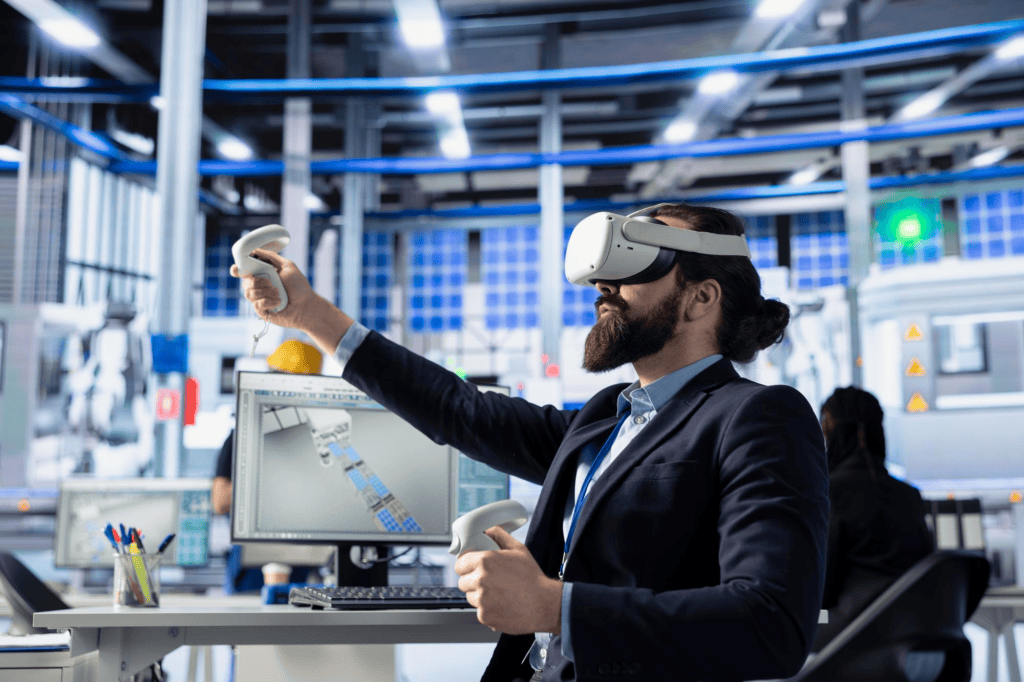
Some skills cannot be developed through reading or watching alone. They require practice.
This is where immersive approaches come in. Using virtual reality or similar technologies, organisations can create environments where employees learn by doing.
Immersive training solutions are particularly valuable in situations where:
- There is a safety risk
- The task is complex
- Real-world training is expensive or difficult to organise
For example, employees can simulate equipment handling, emergency scenarios, or customer interactions without real-world consequences.
What makes this approach powerful is not just the technology. It is the level of engagement and realism it creates, which leads to better skill transfer.
Blended Learning: Bringing It All Together
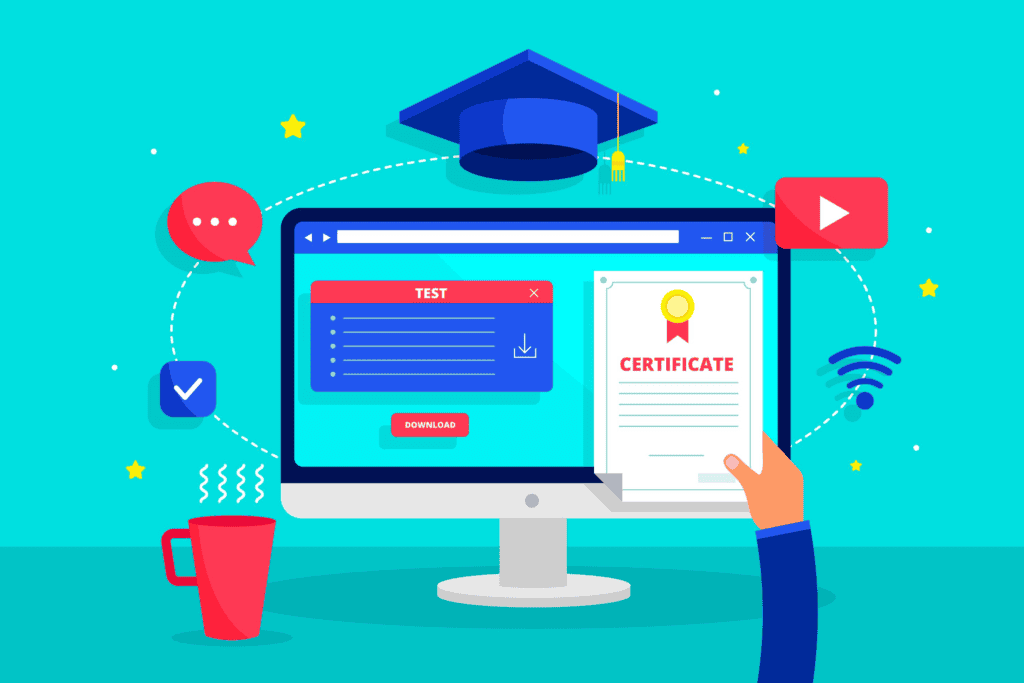
No single method works for every situation. That is why many organisations are moving toward blended learning.
Blended learning combines different formats to create a more complete experience.
Typically, it includes:
- Self-paced digital learning
- Instructor-led sessions, either virtual or in-person
- Practical exercises and discussions
This approach allows organisations to:
- Use digital learning for knowledge building
- Use live sessions for discussion and clarification1
- Reinforce learning through application
Blended learning is particularly effective for leadership development, technical training, and programmes that require deeper understanding.
What Businesses Gain from Modern Training Methods
When training is designed well, the impact goes beyond learning outcomes.
Organisations typically see:
- Better return on investment due to reduced delivery costs and higher effectiveness
- Greater scalability, especially across multiple locations
- Higher engagement, as employees interact with content rather than passively consuming it
- Improved retention, because learning is spaced and contextual
- Faster skill application, which directly supports business performance
In short, training becomes a business enabler rather than a checkbox activity.
The Role of Technology in Enabling Training
Modern training methods are closely linked to the platforms that support them.
A well-implemented Learning Management System allows organisations to:
- Deliver training at scale
- Track completion and performance
- Ensure compliance
At the same time, analytics provide insight into what is working and where gaps exist.
Digital platforms also make it possible to personalise learning journeys, ensuring that employees receive content that is relevant to their roles.
Technology, when used correctly, turns training into a measurable and continuously improving process.
How CHRP-EUROPE Approaches Employee Training
As organisations refine their training strategies, the need for tailored solutions becomes clear.
CHRP-EUROPE works with businesses to design learning experiences that are aligned with real operational needs.
This includes:
- Developing custom elearning development solutions that reflect actual workflows
- Delivering scalable corporate elearning solutions across regions
- Designing targeted microlearning solutions for continuous learning
- Implementing immersive training solutions for hands-on skill development
The focus is not just on content creation, but on ensuring that learning translates into measurable performance improvement.
Conclusion
Employee training is no longer just a support function. It is a key driver of organisational performance.
Modern employee training methods are helping businesses move from static, one-time learning to continuous, adaptive development.
For European organisations, this shift is especially important. The ability to upskill teams quickly and effectively is directly linked to competitiveness.
The organisations that invest in the right training strategies today will be the ones that adapt faster, perform better, and lead in the future.